When Emotions Feel Bigger Than Expected
You may be here because something about your child or teen’s behavior doesn’t feel quite right.
They may be anxious, easily overwhelmed, or struggling to manage their emotions in ways that are starting to impact daily life. Mornings might feel stressful. Small frustrations can turn into big reactions. School, friendships, or transitions may feel harder than they should.
At times, it can be difficult to know what’s typical and what might need more support.
You may notice things like:
• frequent worry or anxiety
• emotional outbursts or shutdowns
• difficulty with transitions or change
• social struggles or school avoidance
• big reactions that seem out of proportion to the situation
As a parent, it’s easy to start questioning yourself. You may wonder if you’re missing something, if you should be handling things differently, or if this is something your child will simply grow out of.
Many parents come to therapy not because something is “wrong,” but because they want to better understand what their child is experiencing and how to support them in a more effective way.
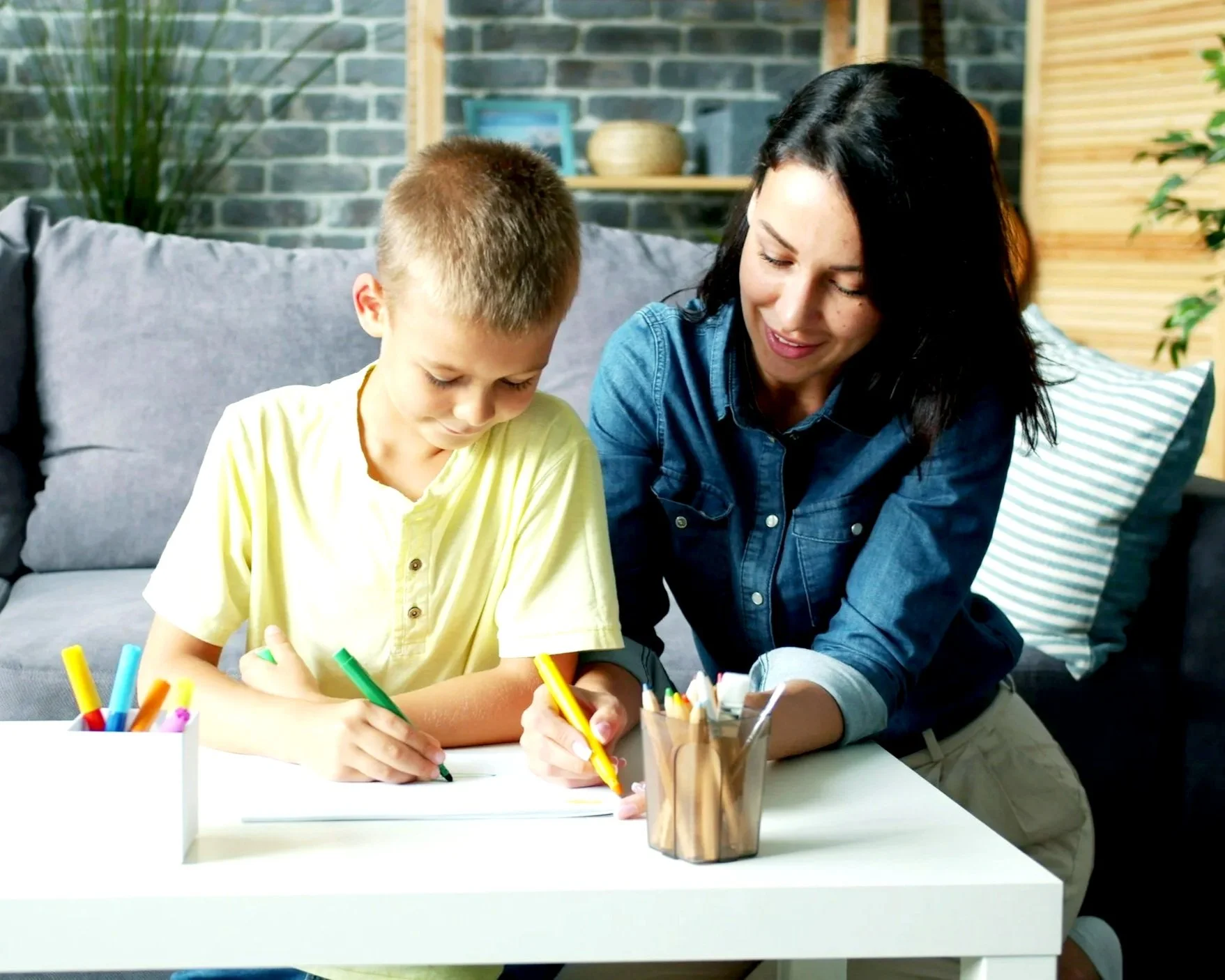
A Thoughtful, Collaborative Approach
Therapy for children and teens is not just about managing behavior. It’s about understanding what is driving it.
In our work together, I take a trauma-informed and developmentally appropriate approach to help children and teens make sense of their emotions and experiences. Sessions are tailored to your child’s age and needs, whether that involves conversation, structured interventions, or more interactive, play-based approaches.
Equally important is collaboration with parents. You are a central part of your child’s support system, and therapy often includes guidance to help you respond to your child’s emotions with greater clarity and confidence.
Rather than focusing only on surface-level behaviors, we look at the underlying patterns. Many emotional reactions have roots in earlier experiences that may not have been fully processed at the time.
Therapy provides a space to slow down, understand those patterns, and begin shifting them in a way that feels manageable and sustainable.
What Change Can Look Like
As children and teens begin to understand their emotions more clearly, their responses often begin to shift.
Children may become more able to express what they’re feeling without becoming overwhelmed. Transitions can feel smoother. Anxiety may still show up, but it becomes more manageable.
Teens often develop a greater sense of self-awareness and confidence in how they handle stress, relationships, and expectations. Communication can improve, both at home and in other areas of their lives.
For parents, there is often a growing sense of clarity and relief. Instead of feeling unsure how to respond, you begin to understand what your child needs and how to support them more effectively.
Change does not happen overnight, but with the right support, things can begin to feel more manageable, more predictable, and less overwhelming for everyone involved.
Trauma-Informed Therapy
My work is grounded in trauma-informed care, which recognizes that emotional and behavioral patterns are often shaped by earlier experiences.
I am trained in Trauma-Focused Cognitive Behavioral Therapy (TF-CBT) and Eye Movement Desensitization and Reprocessing (EMDR), both of which are evidence-based approaches for helping children and teens process difficult or overwhelming experiences.
TF-CBT provides a structured, supportive framework to help children understand their thoughts, feelings, and reactions, while building practical coping skills and emotional regulation.
EMDR is a therapy approach that helps the brain process distressing experiences so they no longer carry the same emotional intensity. For children and teens, this can be adapted in developmentally appropriate ways to support healing and reduce symptoms such as anxiety, reactivity, or distress connected to past experiences.
Not every child will need these approaches, but when appropriate, they can be an important part of helping emotional patterns shift in a meaningful and lasting way.